

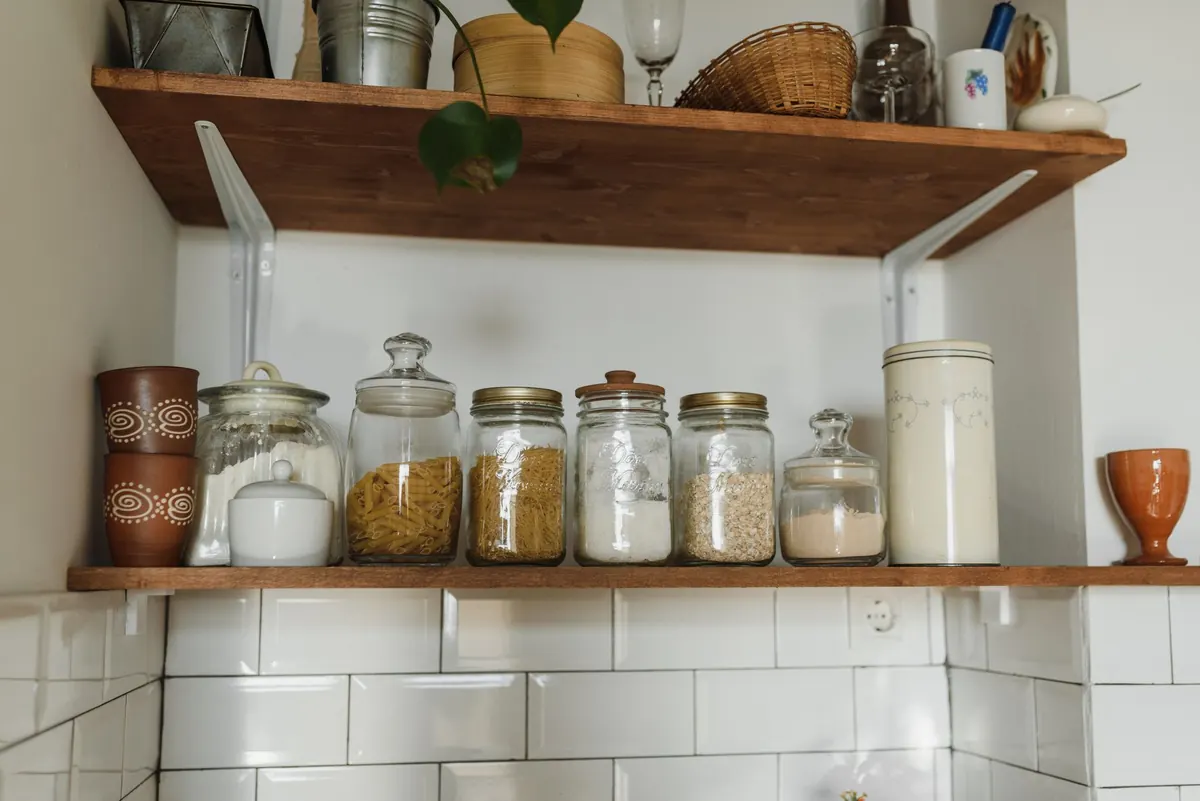
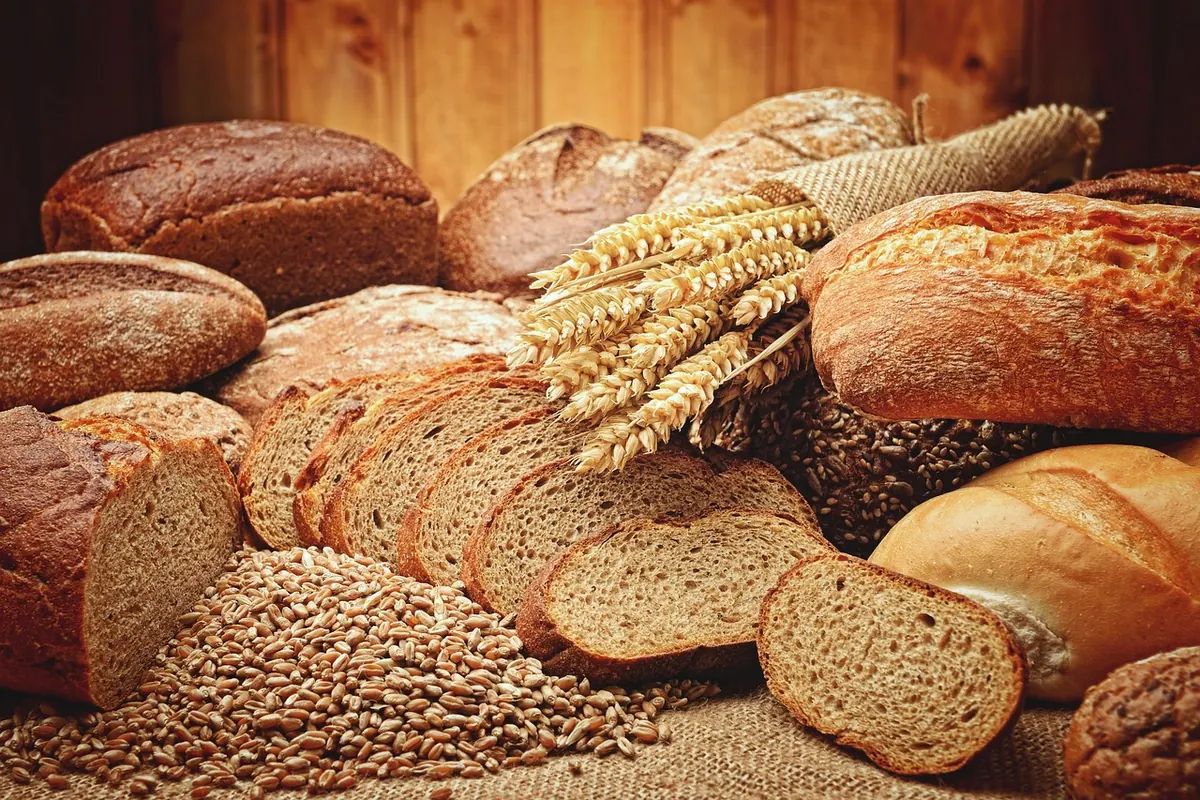
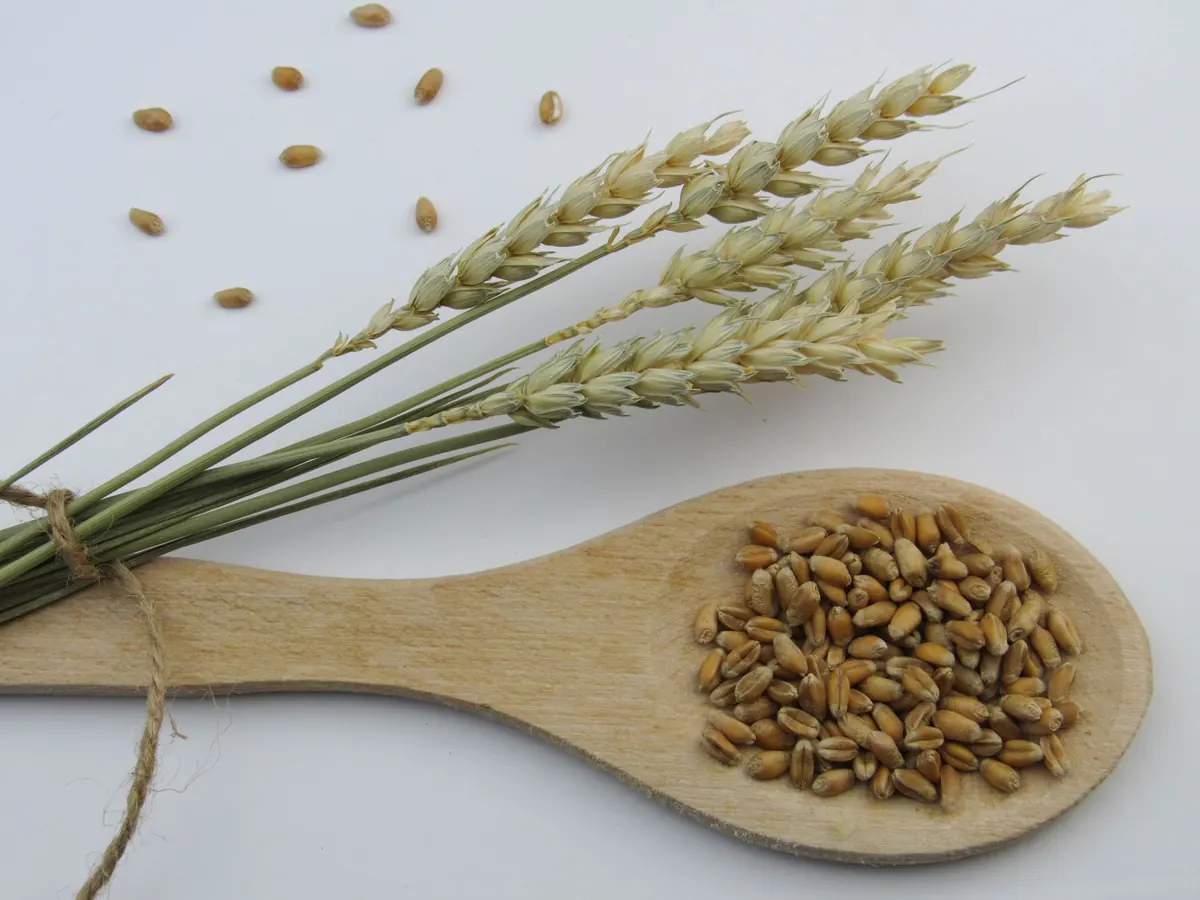
Three squat sacks sit on the flour shelf of almost every bakery that takes grain seriously: einkorn, emmer, spelt. They look like a history lesson, and they bake like one. Each has a stubborn streak — dough that slackens, gluten that tears, a loaf that spreads the moment you turn your back. That stubbornness is also where the flavour comes from. What follows is what each grain does in the bowl, what it does to your bread, and a sensible way to begin.
Why These Grains Are Different
What makes a grain ancient is botany, not marketing. Einkorn is a diploid wheat with fourteen chromosomes, one of the first wheats people cultivated. Emmer is tetraploid, with twenty-eight. Spelt is hexaploid, forty-two, the same count as modern bread wheat but on an older branch of the family. All three are hulled: the glumes grip the kernel tightly and have to be stripped off after harvest. Free-threshing wheat, which sheds its husk in the combine, made them uneconomical, and they survived in mountain fields and seed collections until bakers went looking for them again.
In the bowl the difference is easy to feel. Their gluten is weaker and much more extensible than bread wheat — it stretches, keeps stretching, then tears. Wholegrain versions also carry a high proportion of bran to endosperm, and that bran is thin and sharp. Both facts shape nearly every decision you will make with these flours.
The Three Grains, One by One
Einkorn
The smallest kernel of the three, and the most delicate to handle. Einkorn has a warm, toasted-hazelnut aroma, a green grassy note and a sweetness that reads almost like butter. Its carotenoids give the crumb a soft golden tint. The dough, though, is soft, tacky and almost entirely lacking in elasticity: press it and it stays pressed. It also ferments quickly. Use it at 30 to 50 percent in a blend, or let it star alone in flatbreads, focaccia, pancakes, cookies and pie crust, where a short, slack dough is an advantage rather than a problem.
Emmer
Emmer tastes like wheat with the volume turned up and the sweetness turned down — earthy, faintly bitter in the bran, with a long finish. It sits between its two neighbours in the bowl: more strength and elasticity than einkorn, more forgiveness than spelt. It is the ancestor of durum, so it makes excellent pasta and a rustic loaf with real backbone. Start at 25 to 40 percent of your flour.
Spelt
The easiest entry point, and the one most bakeries keep in stock. Spelt is sweet and nutty, with a yoghurt-like tang when wholemeal. Its gluten is extensible but fragile, so it stretches beautifully and then gives up: an overproofed spelt loaf does not tear, it simply flattens. Whole spelt absorbs water eagerly and then releases it, so a dough that felt firm at mixing can go slack an hour later. It makes a lovely country loaf at 30 to 50 percent, and a decent one at 100 percent if you handle it carefully.
Working With Weak Gluten
Treat these flours the way you would treat a tired starter: gently, and earlier than you think. A few rules cover most of it.
- Hold water back. Start with 5 to 10 percent less than your usual hydration and add it once the flour has hydrated. Whole einkorn and emmer can look dry and then turn sticky.
- Autolyse briefly. Twenty to forty minutes of flour and water before the starter goes in softens the bran and reduces the mixing you need.
- Mix less than you want to. Do not chase a full windowpane. Stop when the dough is cohesive and extensible, then build strength with folds instead.
- Keep fermentation cooler. Around 22 to 24°C suits these grains; they move fast when warm and lose their shape.
- Shape with tension, not force. Gentle preshaping, a firm bench rest, and a floured banneton will do more than tight shaping.
- Bake hot and early. A cold retard of eight to twelve hours firms the dough and gives a better oven spring than a long warm proof.
Blending: The Sane Way to Start
You do not have to choose. Blending lets you keep the structure of bread wheat and borrow the flavour of the old grains. These proportions are dependable starting points for a 500 g flour bill:
- 20 percent ancient grain, 80 percent bread flour. Barely a change in handling; a clear difference in aroma and keeping quality.
- 30 to 40 percent spelt or emmer. A recognisably rustic loaf with a more open, tender crumb. Reduce hydration slightly and shorten the bulk by 20 to 30 minutes.
- 50 percent einkorn. Best in a pan or on a tray rather than a freestanding boule. Expect a flatter, softer loaf, and enjoy it.
A First Loaf to Try
This is a forgiving formula that puts spelt and emmer to work without risking your whole bake: 350 g strong white bread flour, 100 g wholemeal spelt, 50 g wholemeal emmer, 360 g water, 100 g active starter, 10 g fine salt.
- Combine the three flours with 340 g of the water and leave for 40 minutes.
- Add the starter and salt with the remaining water, squeezing until the dough is even.
- Give the dough three sets of stretches and folds, spaced 30 minutes apart.
- Bulk ferment for four to five hours, until the dough has risen by about half and feels jiggly rather than tight.
- Preshape, rest for 20 minutes, then shape and place in a floured banneton. Retard overnight in the fridge.
- Bake in a preheated pot at 250°C with the lid on for 20 minutes, then lid off for another 20 to 25, until the crust is deep brown and the centre reads 96 to 98°C.
- Cool completely before slicing. Wholegrain loaves need it; the crumb sets as it cools.
Buying, Milling and Storing
Whole ancient grains are, like all wholegrain flours, best fresh. The germ is oily and turns rancid within months at room temperature, so buy in small quantities, keep the flour cool and dark, and freeze anything you will not use within a month. If you can buy stone-ground flour from a mill that dates its bags, do — the difference in sweetness is obvious even to people who claim not to taste the difference. Freshly milled flour is best used within a week or two, and it will drink more water than flour that has settled.
Start Small and Keep Notes
Pick one grain, not three. Bake the same blend three times before changing anything, and write down the flour mix, the water, the room temperature, the bulk time and what the dough felt like at each stage. These flours respond to small adjustments, and your own notes will be worth more than any general guideline, including this one. Add ten percent more ancient grain to the next bake, or take ten away. Within a month you will know the dough by hand, and the sacks on the shelf will stop looking like a history lesson and start looking like your flour.
Photo: Karyna Panchenko / Pexels
Related posts
More stories you’ll love reading